How to Play Texas Holdem: Rules, Setup and Scoring
Learn Texas Holdem rules, the four rounds, and how to build the best five-card hand at a friendly table.

Texas Holdem rules are easier to follow when you see the hand as a sequence of shared cards and decisions. Each player receives two private cards. Five cards then appear in the middle for everyone still in the hand to use.
This guide explains a standard Texas Holdem hand from the blinds to the final reveal. The example is made for this article and uses chips only as table markers. It does not describe prizes or cash play.
Texas Holdem rules start with two private cards and five shared cards
Use a standard 52-card pack. Put a dealer button in front of one seat so everyone can see where the action begins. The player just clockwise from the button posts the small blind. The next player posts the big blind. These forced opening contributions give the first round a starting point.
Deal two face-down cards to every player. These are hole cards. Keep them private. The board will later hold five community cards that every remaining player may use. According to the Bicycle Texas Holdem rules guide, a player can make a five-card hand with any combination of the seven available cards. That means a player may use two, one, or none of their hole cards.

Texas Holdem rules use four betting rounds
A complete hand has four rounds. The names are pre-flop, flop, turn, and river. The first starts after each player sees their two private cards. The flop adds three community cards. The turn adds the fourth community card. The river adds the fifth and final community card.
- Pre-flop: Start to the left of the big blind. A player may fold, call the current amount, or raise.
- Flop: Place three community cards face up. The active player clockwise from the button begins this round.
- Turn: Add one face-up community card. Play another round.
- River: Add the final face-up community card. Play the last round, then compare hands if more than one player remains.
When no one has made a bet in a round, a player may check. Checking keeps the cards in play without adding chips. When someone has made a bet, the next player can fold, call by matching it, or raise by matching and adding more. A folded hand takes no further part in that hand. A round ends when all active players have contributed the same amount.
Build the best five-card hand from seven cards
At the final reveal, do not try to use every card. Choose the strongest five-card combination from the two hole cards and five community cards. A straight flush ranks above four of a kind. Then come a full house, flush, straight, three of a kind, two pair, one pair, and high card. Suits have equal rank.
It helps to pause after every new community card. Ask two simple questions: which five-card hand can the board make already, and which private cards improve it? That habit prevents a common beginner mistake, which is treating both hole cards as compulsory. They are not.
Follow a made-up Texas Holdem example
This sample is for practice, not a record of a real game. Four players begin the hand. One player folds before the flop. The remaining players use the same board but arrive at different possible five-card hands.
| Stage | Community cards revealed | Active players | What to check |
|---|---|---|---|
| Pre-flop | None | 4 | Private cards and the opening action |
| Flop | 3 | 3 | Pairs, draws, and board texture |
| Turn | 4 | 3 | Which hands improved |
| River | 5 | 2 | Best five-card hand at the final reveal |
Suppose the five shared cards are ace, king, queen, ten, and nine in mixed suits. The board itself makes a straight. A player holding two unrelated low cards still has that straight. A player holding a jack can use it with the ace through ten for a higher straight. The useful lesson is not to guess from two private cards alone. Read all seven cards together.
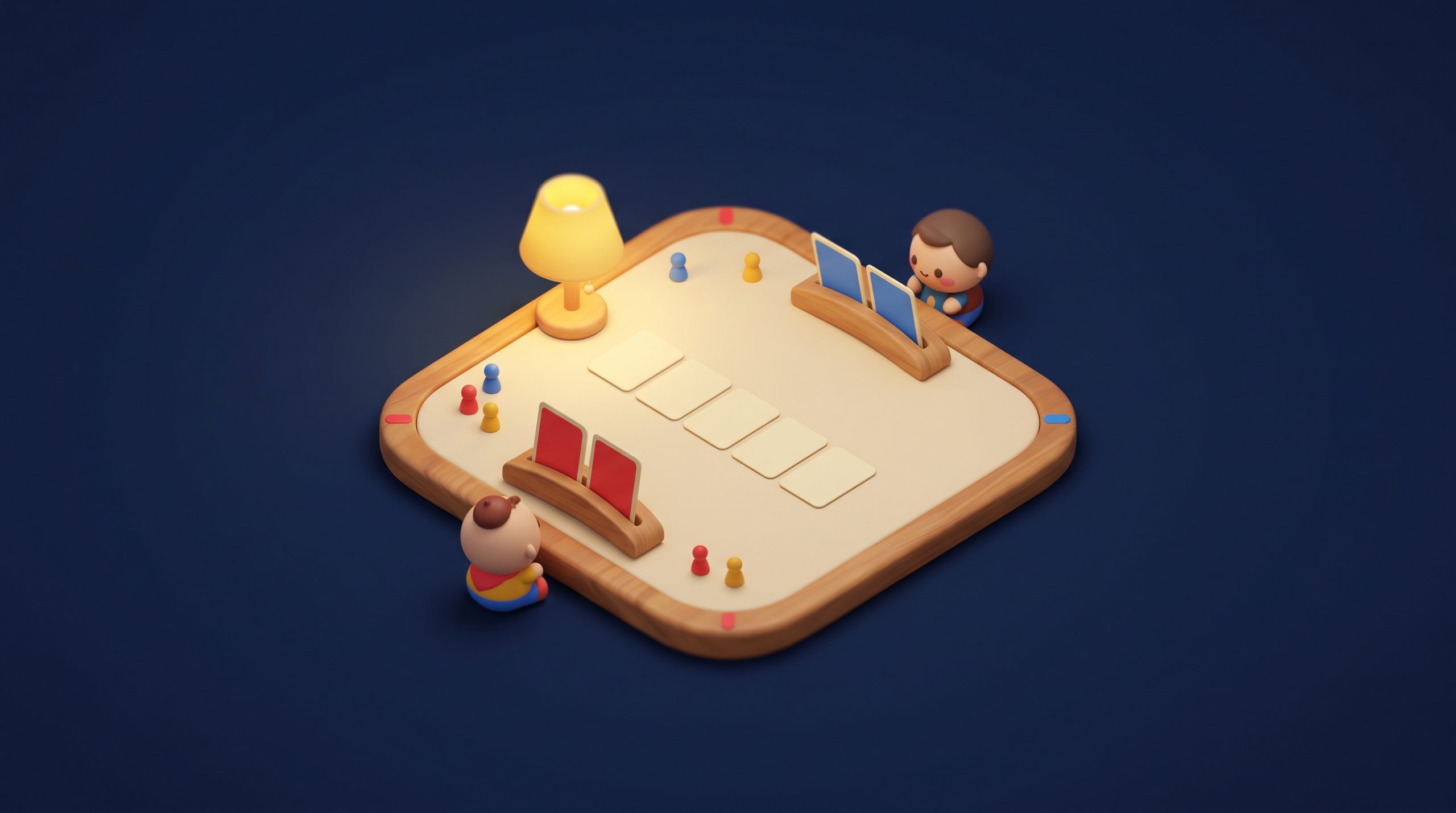
Keep each Texas Holdem hand clear for everyone
Say your action before moving chips when the table is new. Keep cards in front of your own seat. Wait until the action reaches you. If you fold, place the cards face down without showing them. A steady pace helps friends learn because the order of play stays visible.
For a first game night, agree on the blind size, whether any antes apply, and the amount of chips each person receives before the first deal. Then let the button move clockwise after each completed hand. Friendly bots can fill an empty seat at a Masa table, and hand the seat over when a player arrives, so a group can begin without waiting for every chair to fill.
Practice the hand order before adding speed
Deal a few hands with the goal of naming the stage out loud: pre-flop, flop, turn, river. Then ask each player to identify their best five cards at the end. This short exercise makes the shared-card pattern familiar before anyone worries about quick decisions.
For another card-table format, see the guide to following bridge team events. Browse more card-table reading in Card Games.
Play now
Open Texas Holdem at Masa to practice the four rounds with friends. You can also join a table through Masa Play.